

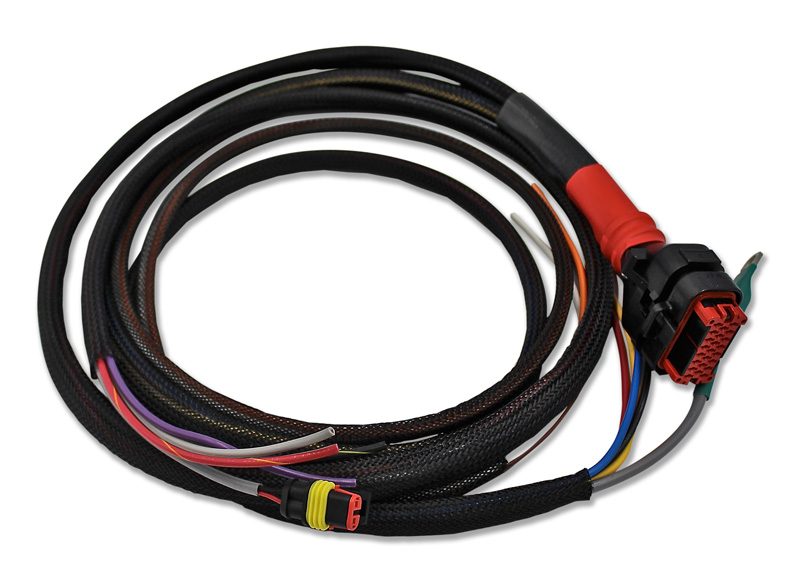
WS500 Wiring Harness-High Current
$104.95
| High-Current variant of WS500/NH, includes additional 2nd set of Alt+, Alt- and Field wires. Alternator Temperature Sensor included.. Alternator Temperature Sensor included.
Wiring harness for WS500 alternator regulator. Includes branches for alternator, panel and battery. Select which configuration you need, either P(Positive excitation) or N(Negative Excitation)Regulators as field windings have two possible field polarities. See detailed description and Product images to help you determine your configuration. |
| High-Current variant of WS500/NH, includes additional 2nd set of Alt+, Alt- and Field wires. Alternator Temperature Sensor included.. Alternator Temperature Sensor included.
Wiring harness for WS500 alternator regulator. Includes branches for alternator, panel and battery. Select which configuration you need, either P(Positive excitation) or N(Negative Excitation)Regulators as field windings have two possible field polarities. It is important to know the difference when installing different regulators or testing regulator function. The two types are as follows:a. Positive Polarity. The positive regulator controls a positive excitation voltage. Inside the alternator, one end of the field is connected to the negative polarity. Alternators with this configuration include Bosch, Motorola, Ingram, Sev-Marchal (older models), Silver Bullet, Lestek, Balmar:(1) Polarity Test. To test, use a multimeter on the ohms x 1 range andconnect across the field connection to an unpainted part of the alternator case or negative output terminal. (2) Meter Reading. The reading should be in the range of 3 to 8 ohms.
b. Negative Polarity. The negative regulator controls a negative excitation voltage. Inside the alternator, one end of the field is connected to the positive polarity. Alternators with this configuration include Hitachi, Lucas A127, ACR 17-25, and AC5, CAV, Paris-Rhone, new model Sev-Marchal, and Valeo, AC Delco, Mitsubishi: (1) Polarity Test. To test, use a multimeter on the Ohms x 1 range and connect across the field connection to the alternator’s positive terminal. (2) Meter Reading. The reading should be in the range of 3 to 8 Ohms. b. Negative Polarity. The negative regulator controls a negative excitation voltage. Inside the alternator, one end of the field is connected to the positive polarity. Alternators with this configuration include Hitachi, Lucas A127, ACR 17-25, and AC5, CAV, Paris-Rhone, new model Sev-Marchal, and Valeo, AC Delco, Mitsubishi: (1) Polarity Test. To test, use a multimeter on the Ohms x 1 range and connect across the field connection to the alternator’s positive terminal. (2) Meter Reading. The reading should be in the range of 3 to 8 Ohms. |
| Weight | .5 kg |
|---|---|
| Dimensions | 30 × 30 × 8 cm |
| Alternator Type | Positive Excitation, Negative Excitation |
Related products
-
WS100 To Ford Female Cable Connector
$24.95Add to cartThis handy pigtail makes it possible to connect the WS100 Voltage Regulator to an existing regulator cable commonly used in existing regulator installations. Perfect for taking advantage of the WS100 regulator as an inexpensive replacement for other multi-stage voltage regulators.
-
WS500 Regulator Harness (P-type) with CAN Deutsch Connector
$99.95Add to cartWS500 Regulator Harness (P-type) with CAN high/low wires and a Deutsch connector. Includes Alt. Temp. Sensor. Use this harness for applications where you want to tie into an existing CANBus network using the hi/lo wires only and not have to use the onboard RJ45 cable connectors in the WS500 itself. To connect to a NMEA2000 …
WS500 Regulator Harness (P-type) with CAN Deutsch ConnectorRead More
Reviews
There are no reviews yet.